Sunday, September 27, 2009

Gestational Hypertension

For those of you who are pregnant (or planning to be), we will be explaining everything you need to know about gestational hypertension and how to treat it.


1-What is gestational hypertension?

A patient suffers from hypertension if his systolic blood pressure exceeds 140mmHg, and/or his diastolic blood pressure 90mmHg.

Two types of hypertension can occur during pregnancy:

  • The first one is an elevated blood pressure that occurs only during the final stages of the first pregnancy (primipare), and is accompanied by edema and/or proteinurea (presence of proteins in the urine) without any previous vascular or renal antecedents. We can say that the proteinurea, the edema and the high blood pressure form a classic triad (even though only 2 of these 3 may be present). This type of hypertension is called pre-eclampsia (because it usually occurs before eclampsia, a seizure that can be very dangerous) or pregnancy-induced hypertension (PIH), toxemia or more commonly Gestational Hypertension.
  • The second type of hypertension is a high blood pressure that occurs to women who has had a previous history of hypertension. It is a complete different disease that will not be discussed in this article.

P.S: These two kinds of hypertension share similar risks and treatments.


2-what will I feel if I have gestational hypertension?

Like we said before, in gestational hypertension the elevated blood pressure is a part of a characteristic triad .Here are some symptoms you may encounter:

  • Blood hypertension: headache, vision and hearing problems that may occur at any time during the pregnancy.
  • Proteinurea (presence of protein in the urine): it can be detected at your gynecologist clinic by a simple test.
  • Edemas: hypertension specific symptoms include abundant, fast growing swellings over the face, apart from the normal edemas that occurs usually in gestations .The decrease in the volume of urine (oligouria) may be very characteristic but it usually occurs at a very late stage of the pregnancy.

P.S.: Some women may not feel any symptoms, and this hypertension will be detected by their routine gynecologist visits.


3-What causes these changes?

At the time of writing, we are not sure about the factors that may contribute to this condition, but many hypotheses have been made. We think that these changes are related directly or indirectly to a defect in the vessels of the uterus and the placenta.


4-why is gestational hypertension dangerous? And what are the complications?

This hypertension can cause very serious complications, putting the mother's and the fetus' life at risk.

First let us expose the mother's complications:

  • Damages in the brain, as brain swelling and hemorrhage or hypertension encephalopathy (clinical manifestations include headache, nausea, vomiting, seizures and even coma)
  • Rupture of the liver, indicated by pain at the right side of the abdomen
  • Pulmonary edema (trouble in breathing due to water retention in the lung)
  • Renal failure (inability to produce urine)
  • Eclampsia : it is a very dangerous seizure resulting from the high blood pressure that may lead to the death of the mother by asphyxia , cardiac failure, pulmonary edema, cerebral hemorrhage…
  • Coagulation problems.

Second: fetus's complications:

  • Delayed fetal development or even fetal death.


5- Who is at risk?

There are many risk factors for the gestational hypertension; they will be divided between obstetrical and non obstetrical:

First, non obstetrical risk factors:

  • Family history of hypertension, obesity, diabetes, gestational hypertension specially in sisters and mother
  • Ages less than 18 and more than 40
  • Chronic hypertension
  • Diabetes
  • Obesity
  • Transitory hypertension due to contraceptive pills
  • Renal problems

Second, obstetrical risk factors:

  • First pregnancy (or first with a new partner)
  • Twin pregnancy
  • Previous Gestational hypertension or Eclampsia
  • Previous unexplained fetal complications
  • Urinary infections


6-What tests should I do to ensure the security of my babe?

Due to the severity of this pathology, the mother should be put under close surveillance if there is any suspicion of gestational hypertension. This includes hospitalization, where proper tests will be done.

These tests can be divided in 3 categories, conducted on a daily basis when not specified:

First, clinical surveillance:

  • Detection of preeclampsia symptoms (headache, vision and hearing problems, abdominal pain…)
  • Evaluation of the edema and diureses (urine quantity)
  • Measurement of the uterus length.

Second, biological surveillance:

  • Measurement of the protein in the 24h urine
  • Blood tests

Third, fetal surveillance:

  • Measurement of the fetus cardiac rhythm (3 times a day)
  • Echography (every 15 days)

If the hypertension is under control, the patient can go home but will have to repeat these tests 2 or 3 times a week to prevent any unforeseen complication.


7-How can I treat the gestational hypertension?

The treatment builds up on two distinct approaches

First changes in our daily way of life:

  • The most important is to take enough rest. The mother will have to stop working and lie down several hours a day; moreover, she should always lie down on her left side.
  • The food should be normal without any sodium restriction and sufficiently rich in calories.


Second drug treatment:

This kind of treatment should be given if the patient's diastolic pressure exceeds 100mmHg or if it is a chronic hypertension that persists during pregnancy.

It is a based on a combination of antihypertensive drugs (Catapressan*, Aldomed*, Nepressol*…) given orally if the hypertension is moderated, and intravenously if it becomes severe (diastolic pressure e> 100mmHg and systolic pressure >160mmHg).In the severe form some anticonvulsive drugs (Rivotril*) must also be given to prevent eclampsia .

P.S.: A lot of antihypertensive drugs are actually contraindicated during pregnancy due to their effect on the fetus (e.g.: Loxen*...).


8-Can I do anything to prevent this kind of hypertension?

Some new studies have proven the efficacy of aspirin in diminishing the intensity of the hypertension and its complications.


Last recommendations:

As described earlier, gestational hypertension shares a lot of symptoms with other common pregnancy complications, but the consequences can be deadly if underestimated; a doctor should always be consulted in case of doubt.


Author: Samer Jabbour

Tuesday, September 22, 2009

Love Darts! The Truth About Human Pheromones

Love…it can happen to anyone, at anyplace, on any day...

It is a sturdy emotion that makes us lose grip over our own control, and drive us into action dimed insane by the “clear-headed” among us.

Love has always been present, and love stories have been documented throughout history: Form “Romeo and Juliet” till “Bonnie and Clyde”. The classical passionately believed that love is transmitted by arrows or darts shot by the mythological Eros, or Cupid.

Once the arrows reach the lover, they travel through his eyes into his heart, pierce it and overwhelm him with longing and desire.

But, for love to happen there should be attraction in the first place. What triggers attraction? Is it a muscular body, a good haircut or a warm smile? Or could it be induced by the human love darts : pheromones?


A General Definition

Pheromones are molecular messengers that transmit information from one member of a species to another member of the same species, and influencing its behavior. In the animal kingdom, pheromones have been scientifically proven to exist and they’re function is well established. However, in humans, pheromones are still under investigation.


Types

There are several types of pheromone:

Alarm pheromones, as the name suggests send SOS signals to other members of the same species. Such compounds are released when a specific organism is being attacked by a predator, leading to trigger of either a fight or an escape response (1)

Aggregation pheromones function in defense against predators, and overcoming host resistance by mass attack. (1)

Territorial pheromones help in defining the territory of a particular organism. For example, dogs deposit the so-called pheromones, present in their urine on specific landmarks to mark the perimeter of the claimed territory (1).

Perhaps the most studied of the pheromones are sex pheromones. They are indispensable for survival and replication. These sex pheromones send signals about the availability of a partner for mating. Furthermore, they are well-known for their “male effect”: after a separation of at least one month, the rams are introduced into a flock of sheep in ovarian inactivity; there was a resumption of sexual cycles in a large proportion of females. Pheromones secreted by the sebaceous glands, seems to cause this phenomenon.

Of special interest are the human pheromones, which are claimed to enhance the libido (sex drive) of an individual. Several companies even market human pheromones claiming that they possess aphrodisiac properties. Nonetheless, the number of studies available on human pheromones is very limited. For instance, androstenone, a steroid present in the sweat of the armpits, is being advertised by several companies. This product (smelling like urine) is presented as a sexual attractant, but its effectiveness has never been demonstrated in humans. However, its effectiveness has been proved in pigs.


The Proof

To prove their effectiveness, scientists have turned to the pheromones receptor: the vomeronasal organs (VNOs).
The VNOs are located inside the nose, just as are the organs that pick up olfactory signals (smells). This diagram shows the location of the vomeronasal organ in adult humans.


Until recently the VNOs were thought to be vestigial or functionless organs that we humans no longer use: the human VNOs lack the characteristic capsule and large blood vessel of other mammal’s VNOs. Even more, the sensory epithelium is not fully developed. However, convincing behavioral and anatomical evidence has since brought the notion of a human VNO into the realm of scientific fact. (2)

This system has its own separate organs, nerves, and connecting structures in the brain. Some anatomists (Professor Antoine Corban) refer to the VNO as the 13th cranial nerve. Pheromone information from the VNO is carried straight to the hypothalamus, the older part of the human brain, bypassing the cerebral cortex making us unaware of its present. We cannot “smell” pheromones in the same way as we might smell roses.(3)

Scientists disagree about whether humans still use pheromones as a method of inter-personal communication: current research seems to indicate that we do, although the effects occur below our conscious awareness. Any effects that do exist are considerably less obvious in human beings than in other animals.

The best known case involves the reported synchronization of menstrual cycles among women: The McClintock effect. This study exposed a group of women to a whiff of perspiration from other women. It was found that it caused their menstrual cycles to speed up or slow down depending on the time in the month the sweat was collected; before, during, or after ovulation. Therefore, this study proposed that there are two types of pheromone involved: "One, produced prior to ovulation, shortens the ovarian cycle; and the second, produced just at ovulation, and lengthens the cycle. (3)

A similar study attempted to find out whether or not males can sense ovulation by smelling copulins, fatty acids in vaginal secretions. Males smelled copulin samples from women who were in three different phases of the menstrual cycle. The results showed that males generally could not distinguish between pre-menstrual, menstrual, and ovulatory scents. However, the males also rated the physical attractiveness of the females, and results showed that females were rated more attractive when the males were smelling their copulins, and that the testosterone levels in males increased when they were smelling the copulins. (3)

In addition, women are more attracted by the odor of men who are the most different of them by their MHC genes, starting from puberty (Wedelind, 1995)

Another study shows that babies prefer clothing worn by their own mothers. In this study, ten mothers were asked to wear a cotton pad in their bras for three hours. The pads were then given to their babies to see whether or not they could distinguish between the pads worn by their mothers and those worn by strangers. At the age of six weeks, eight babies had responded by sucking to their mother's pad, one responded to a stranger's pad, and one did not react to its mothers pad, but reacted with a cry to a stranger's pad. Researchers believe this could suggest that men and women choose their mates by sniffing out those that have "compatible immune systems."(3)


Conclusion

Attraction isn’t a choice! Sometimes you can look at the person and feel obliged to talk to them or to follow them and observe them carefully without even being attracted to their looks…attraction is an evolutionary process that takes control over our own mind and body, long enough to make sure that our selfish genes reproduce. It is an intricate topic that even today’s modern science does not dare to explore it in the profundity it truly deserves.

Author:Mario Zanetti


References:

1) http://en.wikipedia.org/wiki/Pheromone
2) http://serendip.brynmawr.edu/bb/neuro/neuro99/web3/Bernstein.htmlDo human pheromone exists?
3) http://serendip.brynmawr.edu/exchange/node/2052

Monday, September 21, 2009

Tips to Fight Heartburn

Many of you will feel concerned when we talk about heartburn, or acid indigestion. In fact, a great number of people suffer from a recurrent problem of burning pain in the chest and/or throat, especially in specific times such as during sleep, after eating… Even though it is called heartburn, this pain is not related to the heart but to our digestive system as we will be explaining later. In fact, it is the irritation of the mouth and esophagus from acid secretions coming from the stomach that causes this heartburn. We will try to explain how this happens and answer all the questions that can come into your mind about this disease and how we can deal with it.


1-First, let us have a small briefing about how the food is processed in our stomach so that we can understand later why some people do have heartburn:


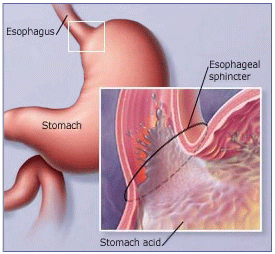
We can divide our digestive system into three parts: the mouth, esophagus and stomach, the small intestine and the large intestine. Our interest for now is only the first part, formed by the mouth, the esophagus and stomach. As soon as the food we eat enters our mouth, the digestion process begins. We will not go into useless details, but we will just mention that after chewing in the mouth, food is swallowed into the esophagus which acts like a tube where food is propelled through muscular contractions into the stomach for digestion to continue. There, acid secretions are produced to break down the food into smaller molecules.

The logical question that comes into our minds is what prevents food from running backwards from the stomach to the esophagus and then the mouth? Well this is simple. At the top and bottom of the esophagus, we have muscles that prevent food from going backwards called sphincters. In fact, these muscles stay constantly contracted to close the two ends of the esophagus, and they only relax at swallowing to allow food to arrive to the stomach. Thus, with the esophagus closed, no food can reflux backward. Why then can acid make it to the esophagus and the mouth of some of us?

Keeping in mind what we have learned about the first part of the digestive system, we can easily understand that any dysfunction in the sphincter at the bottom of the esophagus can cause food and stomach secretions to go backwards towards the esophagus and the mouth. Since the content of the stomach is acid, and the esophagus is not accustomed to such substances, it gets irritated, producing the pain that we call heartburn or pyrosis in medical term. On the other hand, this reflux of stomach content inside the esophagus is called GERD, or gastro-intestinal reflux disease. It results from a weakness in the lower sphincter of the esophagus which becomes unable to close and preventing stomach content from going backwards. In order to be complete, we should signal that another situation called hiatal hernia (protrusion (or herniation) of the upper part of the stomach into the thorax) can also cause reflux.


2-Now what can you possibly feel if you have reflux?

The cardinal symptom of reflux is the heartburn, which is the pain of the chest and mid-abdomen which follows the tract of the esophagus, this is why we call it a retro-sternal pain (for it is a pain felt behind the sternum or breast bone, the bone in the middle of our chest). However, this symptom is not necessary. Sometimes a constantly sore throat can be the only symptom felt. Some other people can have such an important reflux that they have a regurgitation of food into their mouth. Trouble or pain in swallowing can also be present in some other, as well as nausea. Moreover, people with GERD report excessive salivation because, as saliva is generally basic, thus it is the normal response of the organism to the acidic content of reflux.

KEEP IN MIND:

  • All of us may feel heartburn some day in our lives, but this doesn’t mean we have reflux and need to treat our symptoms. In fact, in order to say that we have reflux, we need to experience heartburn at least twice a week.
  • We can have reflux without having heartburn, but presenting any of the other possible symptoms of GERD.

3-Now, is all of this dangerous? Outside the pain we feel, is it so bad to have acid irritate our esophagus?

Well yes, untreated reflux becomes dangerous because it causes complications. In fact, the irritation of the esophagus damages it and can cause bleeding. This is what we call esophagitis. Moreover, esophagitis can cause narrowing of the esophagus, rendering swallowing difficult. At the extreme, this esophagitis can be a source for the development of esophageal cancer. Esophageal injury can also cause symptoms such as chronic cough, hoarseness and constant throat clearing, asthma, erosion of dental enema, dentine hypersensitivy and sinusitis. On the other hand, regurgitation can cause food to get into the breathing airways, especially during sleep. This can lead to infection of the breathing airways called aspiration pneumonia, which can become dangerous especially in elderly people.


4-What can I do to treat this reflux?


We can divide the treatment of reflux into 2 parts: the preventive and the medical treatment. We talk about preventive treatment because reflux does have precipitating factors which can precipitate and which, if taken into consideration, can help us reduce reflux. In fact, factors that can cause reflux include: obesity, pregnancy, smoking and some kinds of food and drinks. Of the food and drinks that can cause reflux we can list:
  • Any caffeine containing product
  • Coffee (even if decaffeinated)
  • Carbonated drinks (soda, soft drinks…)
  • Alcohol
  • Tea
  • Tomato and tomato based products
  • Onion
  • Chocolate
  • Mint and peppermint
  • Citrus fruits (oranges, grapefruit, mandarin…) or juice
  • Fatty food
  • Spicy food
On the other hand, eating a large meal causes excessive production of acidic material by the stomach, thus worsening heartburn symptoms. Moreover, sleeping, because of the horizontal position adopted, favors the reflux of stomach content upwards towards the mouth. Thus, sleeping horizontally and eating within 2 hours before going to bed can favor reflux symptoms.

Know that we know all this stuff about reflux, we can figure out techniques to prevent it and lessen its symptoms. Thus, restriction in eating reflux favoring food is helpful. The same goes with changing our eating habits in order to eat more frequent but less copious meals, as well as avoiding eating 2 hours before sleeping. Because smoking and obesity favor reflux, it is also useful to lose weight and stop smoking. Finally, it is also recommended to raise the head of the bed. Here, we should specify that it is not sufficient to only raise our head, for not only doesn’t it help reflux, but it also puts pressure on our neck. This is why we should raise our upper body for at least 15 to 20 cm (6 to 8 inches).

You may agree that doing all this is pretty constraining. Knowing that not all of these measures do bear the same importance, it would be useful if we gave you some more tips about lifestyle treatment of reflux. What is important to know is that all of these preventive behaviors are not mandatory to reduce reflux. In fact, all of them contribute more or less to lessening the symptoms. The more measure you adopt, the more you help yourself by reducing reflux and heartburn. However, studies have shown that it is much more important to adopt changes in eating habits than in the nature of the food we eat. Thus, losing weight, eating small but frequent meals, and restrain from eating 2 hours before sleep are more important than what you are eating in these meals.

TAKE HOME MESSAGE:
  • Eat 4 or 5 five small meals a day, don’t overeat
  • Restrain from lying within the first 2 hours after eating (if you want to take a nap, try to take it in a sitting position)
  • Raise the head of your bed for at least 15 to 20 cm (you can use bed risers you put under the legs of the bead to raise the bedposts at the head of your bed or a therapeutic bed wedge pillow) P.S.: just using extra pillows does not help!
  • Try as much as you can to avoid reflux favoring food, or at least to reduce their contribution in your daily food intake, especially before bedtime.
  • Stop smoking
  • Lose weight
P.S.: The behavioral changes related to eating styles are not only beneficial for treating reflux, but also for having a healthy eating habit which prevents weight gain and disturbances related to bad food quality. So why not say that GERD will then be a helpful stimulus that can push you to adopt a healthier eating habit?

Medical treatment of GERD involves two possibilities: either you work on reestablishing the mechanism which blocks stomach content from going backwards, or you simply eliminate the irritating acid secretion which is at the origin of the deleterious effects or reflux. The majors categories of medicaments include:
  • Proton pump inhibitors or PPI (such as omeprazole/Prilosec, lansoprazole/Prevacid, rabeprazole/Pariet, esomeprazole/Nexium…): they stop the proton pump which is at the origin of the acid secretion in the stomach, and are the most effective and recommended reducers of gastric acid secretions.
  • H2 Blockers (Pepcid, Tagamet, Zantac): they are effective in 50% of patients and provide short term relief from symptoms
  • Prokinetics (Reglan, Urecholine): they strengthen the lower sphincter of the esophagus and make the stomach empty food to the small intestine faster. However, they have frequent and significant side effects and are thus not recommended
  • Antacids (Malox, Ripoan, Diovol) use basic salts to neutralize the stomach acid. They are used before meals or when symptoms begin to reduce acidity. Long term usage of antacids can cause diarrhea, constipation, and problems in calcium regulation, so they are only recommended for short term usage
  • Alginates foaming agents (Gaviscon) form a protective barrier in the stomach to reduce reflux and acidity. It acts faster than H2 blockers and PPI and on a longer term than antacids
Interventional therapy is the last resort in case of failure of medications. It works on strengthening the lower sphincter of the esophagus by different techniques in order to stop reflux.


5-Is there anything else I need to know?


Well yes, two more things to keep in mind: First, consult a doctor for two reasons:
  • To know what medication you should take and in what dosage
  • If symptoms persist or worsen despite medication
Second, to beware of chest pain from cardiac origin that can be confused with heartburn. So call your doctor if:
  • You have trouble swallowing or pain when swallowing.
  • You're vomiting blood.
  • Your stools are bloody or black.
  • You're short of breath.
  • You're dizzy or lightheaded.
  • You have pain going into your neck and shoulder.
  • You break out in a sweat when you have pain in your chest.
  • You have heartburn often (more than 3 times a week) for more than 2 weeks.

Author: Dany Matar


Refrences:

http://familydoctor.org
http://www.homebusinessandfamilylife.com